
Window Furnishings and Thermal Performance: Curtains, Blinds and Pelmets
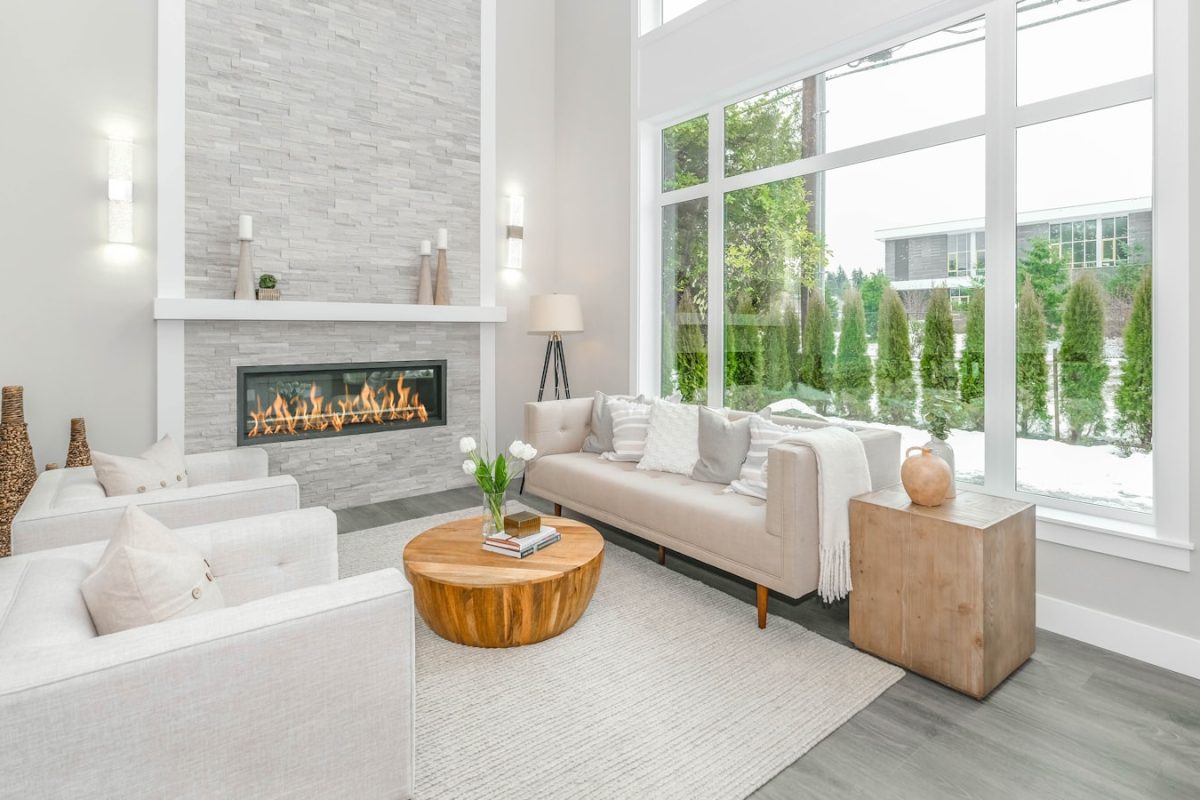
How curtains, blinds, pelmets and external shades cut heat loss and gain, and how the right furnishings can support your NatHERS result.
Windows are usually the weakest thermal point in a home, so what you hang over them matters more than most people expect. The right curtains, blinds and pelmets can noticeably slow heat loss in winter and heat gain in summer.
This guide explains how window furnishings work thermally, why a sealed pelmet and a heavy floor-length curtain are such a strong pairing, and where furnishings can and cannot help your NatHERS assessment.
Why windows lose and gain so much heat
Glass conducts heat far faster than an insulated wall. In winter, warm indoor air touches cold glass, gives up its heat and sinks, drawing more warm air across the glass in a continuous loop. In summer, sunlight pours straight through the glass and heats the room directly. Furnishings work by interrupting these two processes: trapping a layer of still air against the glass, and blocking or reflecting incoming sun.
It helps to think of the two pathways separately. Conductive and convective loss happens at any time the room is warmer than the air outside, day or night, and it is the dominant problem on a cold winter evening. Radiant solar gain happens only while the sun strikes the glass, and it is the dominant problem on a hot summer afternoon. A furnishing that is excellent at one job may do almost nothing for the other, which is why matching the treatment to the actual problem is the first step.
Internal versus external furnishings
The single most important distinction is whether the furnishing sits inside or outside the glass.
- Internal furnishings (curtains, roller blinds, honeycomb blinds) are best at reducing winter heat loss. They trap a pocket of still air against the glass and slow the convection loop.
- External furnishings (external shutters, awnings, blinds and eaves) are best at reducing summer heat gain. They stop the sun before it reaches the glass, so the heat never enters the room.
In short, if your problem is a cold house in winter, look inside. If your problem is an overheating house in summer, look outside. Many NSW homes need both, which is why a layered approach tends to work best.
The reason external shading is so effective in summer is simple physics. Once sunlight passes through the glass and is absorbed by a floor or a piece of furniture, that energy has already become heat inside the room. An internal blind can reflect a little of it back, but most of the heat is now trapped behind the glass. Catch the sun before it ever reaches the window and the energy never enters the building. This is why a modest external awning often outperforms an expensive internal treatment on a west-facing window in January.
The power of a sealed pelmet
A pelmet is a board or box across the top of the window that closes the gap above a curtain. Without one, warm air slips over the top of the curtain, slides down the cold glass and escapes back into the room at floor level. The curtain looks like it is working, but air is short-circuiting around it.
A pelmet that is sealed at the top, with curtains that return to the wall at the sides and reach the floor, turns a loose drape into a genuine insulating barrier. The trapped air pocket stays trapped. This is why assessors talk about sealed pelmets and full-length heavy curtains as a set rather than as separate items.
Picture a typical living room window on a frosty Tablelands morning. A curtain hung from an exposed track has an open gap at the top and an open gap at each side. Warm room air rises behind the curtain, spills over that top gap, chills against the glass and tumbles back into the room as a cold draught around your ankles. Add a sealed pelmet and side returns and that loop is broken. The same curtain now holds a still cushion of air, and the surface you feel from across the room is noticeably warmer. The fabric did not change. The detailing did.
Choosing curtains and blinds that perform
Not all furnishings are equal. Heavier, denser and better-fitted options trap more air and block more radiant heat.
- Heavy, lined curtains outperform thin unlined ones. A closely woven fabric with a separate lining holds a thicker still-air layer.
- Floor-length beats sill-length. A curtain that stops at the sill lets the cold-air loop spill out underneath.
- Honeycomb (cellular) blinds are designed with air-filled cells, so they insulate better than a flat roller blind of similar weight.
- Side returns matter. Curtains that wrap back to the wall stop air leaking around the edges.
- A snug fit at every edge counts more than the headline fabric. Gaps at the top, sides or bottom let air bypass the whole treatment.
- Light, reflective backings on summer-facing blinds bounce some radiant heat away rather than absorbing it.
Layering for year-round comfort
The strongest results usually come from combining treatments rather than relying on a single product. A common and effective layered set for a NSW home is external eaves or an awning to handle high summer sun, a honeycomb blind for everyday adjustability, and a heavy lined curtain with a sealed pelmet for cold winter nights. Each layer covers a different condition, so the window performs across the whole year rather than only one season.
Operation matters too. Even the best curtain only works when it is closed at the right time. Closing internal furnishings as the temperature drops in the evening, and lowering external shades before the afternoon sun hits in summer, captures most of the available benefit. Automated or timed external blinds can help where a window is hard to reach or routinely forgotten.
Internal versus external at a glance
| Furnishing | Best for | Main benefit |
|---|---|---|
| Heavy curtains with sealed pelmet | Winter | Traps still air, blocks the cold-air loop |
| Honeycomb blinds | Winter | Air-cell structure adds insulation |
| External awnings and eaves | Summer | Stops sun before it hits the glass |
| External shutters | Summer and winter | Blocks sun and adds an outer barrier |
| External adjustable louvres | Summer | Tunes shading to the sun angle through the day |
| Internal roller blind | Light control | Modest thermal help on its own |
How this supports a NatHERS result
NatHERS software models the whole home, and window treatments are one of the inputs an assessor can capture. Where a sealed pelmet and heavy curtains are genuinely specified and will be installed, the model can reflect that improved performance. External shading from eaves, awnings and adjacent structures is also modelled, because it strongly affects summer heat gain.
It is important to be honest here: furnishings are a contributor, not a magic fix. They help most when the underlying design is already sound, with appropriate glazing, orientation and shading. If your design is close to its target, well-specified furnishings can be one of several adjustments that lift the result. The key word is specified: the model can only credit what is documented on the plans and committed to in the build, so a vague intention to add curtains later carries no weight. Our team can confirm what is realistic for your plans, because the outcome always depends on the whole project working together. You can see how we approach this on our services page.
Frequently asked questions
Do curtains alone improve my NatHERS rating? They can contribute, but only when specified properly with a sealed pelmet and full-length coverage. On their own, loose curtains do little, and the model reflects that.
Are external blinds better than internal ones? For summer heat, yes, because they stop the sun before it reaches the glass. For winter warmth, internal furnishings that trap air are more effective. Many homes benefit from both.
Can I add furnishings later to fix a failing rating? Sometimes, but it is far better to plan them in from the start. Talk to us early so we can confirm whether furnishings are the right lever for your project.
Building or renovating in NSW? Get a fast, fixed-fee quote from our HERA-registered assessors.
Free guide
10 Tips for a 7-Star New Build
Our practical PDF guide to building a comfortable, compliant NSW home - the design decisions that matter most, and how to reach 7 stars without overspending.
We will only use your email to send the guide and the occasional useful update. Unsubscribe anytime. This form is protected by reCAPTCHA.

BASIX & NatHERS specialists helping NSW homeowners and builders achieve energy-efficient, compliant homes.